Terminal Velocity Explained: What Does Skydiving Freefall Feel Like?

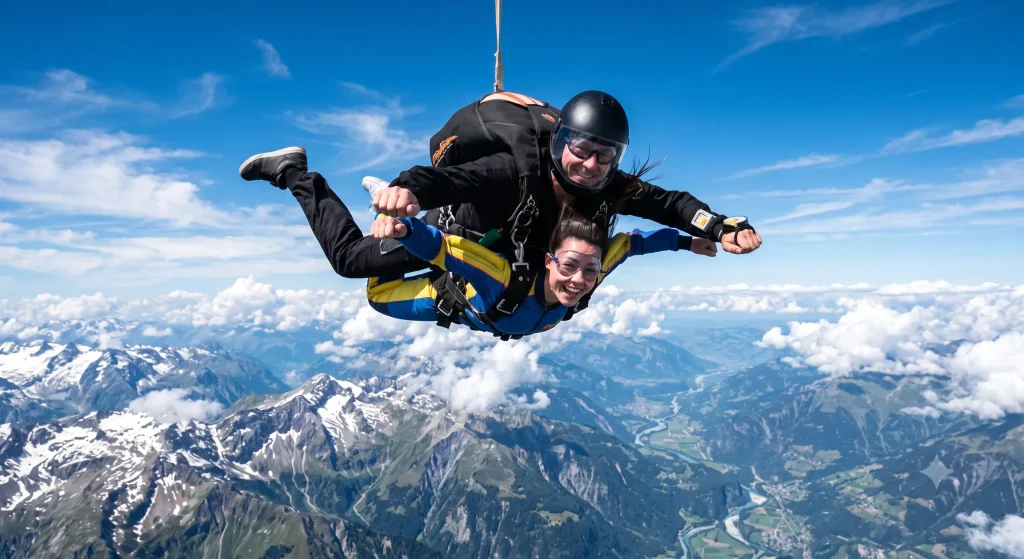
Table of Contents
- What Is Terminal Velocity?
- Why It Doesn't Feel Like Falling
- Does Your Stomach Drop?
- How Fast Is Freefall?
- What You Actually Feel During Freefall
- Why Tandem Skydiving Feels So Comfortable
- The View Changes Everything
- Final Thoughts
- Frequently Asked Questions
Ask anyone who has never been skydiving what they imagine freefall feels like, and you’ll probably hear the same answer:
“Like falling on a giant roller coaster.”
Surprisingly, that’s not what most first-time skydivers experience.
One of the biggest myths surrounding skydiving is the fear of an overwhelming stomach-drop sensation. In reality, freefall feels far smoother, more stable, and more controlled than most people expect.
Understanding the science behind terminal velocity skydiving helps explain why.
When you know what your body is actually experiencing, fear often gives way to excitement.
What Is Terminal Velocity?
The moment you leave the aircraft, gravity begins pulling you toward the ground.
At first, you accelerate.
But as your speed increases, the air pushes back against your body. This resistance, known as air resistance or drag, grows stronger until it balances the force of gravity.
When these two forces become equal, you stop accelerating.
This is called terminal velocity.
For most tandem skydivers, terminal velocity is around 190–200 km/h (approximately 120 mph), although the exact speed varies depending on body position and equipment.
At this point, you aren’t continuing to speed up—you are moving at a nearly constant rate through the air.
Why It Doesn’t Feel Like Falling
This is the part that surprises almost everyone.
During freefall, your body isn’t dropping through empty space.
Instead, you’re supported by a powerful cushion of moving air.
Imagine placing your hand outside the window of a moving car.
The rushing air presses firmly against your palm.
Now imagine that force acting across your entire body.
That constant airflow supports your chest, arms, and legs, creating a sensation that many skydivers describe as floating on air rather than falling.
It’s closer to lying on a column of wind than dropping from a height.
Does Your Stomach Drop?
One of the most common questions is about the skydiving stomach drop sensation.
The answer surprises many first-time jumpers.
Most people experience only a brief moment of excitement as they leave the aircraft.
The prolonged stomach-drop feeling associated with roller coasters usually doesn’t happen.
Why?
Roller coasters create rapid changes in acceleration as the track suddenly drops.
During a tandem skydive, the aircraft maintains forward motion, and your body transitions smoothly into freefall. Once terminal velocity is reached, the acceleration stops, leaving you with a remarkably stable sensation.
Many jumpers even say they expected something much more intense.
How Fast Is Freefall?
A typical tandem skydive reaches freefall speeds of around 190–200 km/h.
That sounds incredibly fast.
However, because there are no nearby objects rushing past, your brain has very little visual reference for speed.
Instead of feeling like you’re racing through the air, the landscape appears to expand slowly beneath you.
Clouds drift by.
Mountains stretch toward the horizon.
Fields and rivers gradually become more detailed as you descend.
It’s a breathtaking visual experience rather than a chaotic one.
What You Actually Feel During Freefall
Every person’s experience is unique, but many first-time skydivers describe similar sensations.
You may notice:
- A strong rush of wind across your body.
- Cool, fresh air.
- A feeling of floating rather than falling.
- Surprisingly stable body position.
- Incredible panoramic views.
Many people also report an unexpected sense of calm once the initial excitement passes.
Instead of fear, they become completely absorbed in the experience.
Why Tandem Skydiving Feels So Comfortable
During a tandem jump, your instructor controls the exit, body position, parachute deployment, and landing.
This allows you to focus entirely on the experience.
You’ll simply:
- Follow the instructor’s guidance.
- Enjoy the views.
- Smile for the camera.
- Experience one of the most memorable moments of your life.
Knowing an experienced instructor is managing every technical aspect provides reassurance that helps many first-time jumpers relax.
The View Changes Everything
Perhaps the most unforgettable part of freefall isn’t the speed.
It’s the perspective.
From thousands of feet above the ground, cities become miniature models.
Roads look like ribbons.
Rivers sparkle in the sunlight.
The horizon stretches farther than most people have ever seen.
For many jumpers, those breathtaking views become the strongest memory of the entire experience.
Final Thoughts
Terminal velocity sounds intimidating until you understand what it really means.
Rather than endlessly accelerating toward the ground, your body quickly reaches a stable balance between gravity and air resistance. Instead of the dramatic stomach-drop sensation many people fear, freefall often feels smooth, controlled, and surprisingly peaceful.
That’s why so many first-time skydivers land with the same reaction:
“I can’t believe it felt like that—I want to do it again.”
Before booking your jump, read “Tandem vs. AFF (Accelerated Freefall): Which First-Time Skydiving Experience is Right for You?” to choose the experience that best matches your goals, explore “Skydiving for Complete Beginners: 5 Rookie Mistakes to Avoid at the Dropzone” to prepare for your first visit, and browse Adhreline’s Marketplace Directory of USPA-Certified Skydiving Centers to compare trusted instructors and professionally managed dropzones across India.
The hardest part of skydiving isn’t the freefall.
It’s taking the first step out of the aircraft.
Once you do, the science takes over—and the experience becomes unforgettable.
Frequently Asked Questions
What does skydiving freefall feel like?
Most people describe freefall as smooth, stable, and surprisingly peaceful. It feels more like floating on a powerful cushion of air than falling.
How fast is freefall during a tandem skydive?
A typical tandem skydive reaches approximately 190–200 km/h (around 120 mph) during terminal velocity.
Do you get a stomach-drop feeling while skydiving?
Usually not. Unlike roller coasters, skydiving involves a smoother transition into freefall, so most jumpers experience little or no prolonged stomach-drop sensation.
Is freefall scary for beginners?
It’s natural to feel nervous before jumping, but many first-time participants find that the fear disappears quickly once they leave the aircraft and settle into stable freefall.
Is tandem skydiving a good choice for first-time jumpers?
Yes. Tandem skydiving allows beginners to experience freefall while an experienced instructor manages the technical aspects of the jump.