
Table of Contents
- Build Endurance Before Strength
- Master the Stair Workout
- Strengthen the Muscles That Protect Your Knees
- Practice Walking With Your Backpack
- Improve Your Breathing
- Recovery Is Part of Training
- Preparation Checklist Before Departure
- Final Thoughts
- Frequently Asked Questions
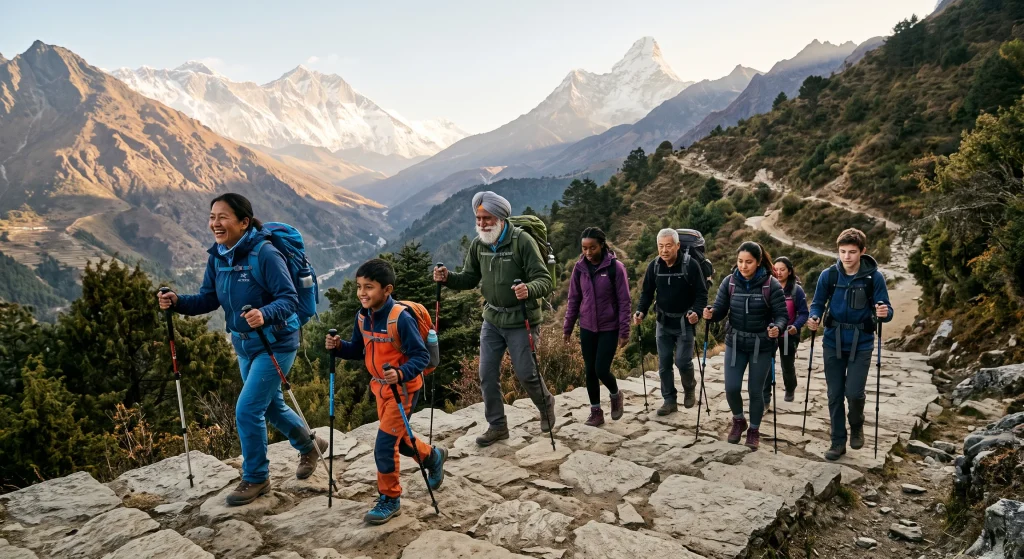
For many people, a pilgrimage is far more than a trek. It is a deeply personal journey shaped by faith, determination, and reflection. Yet reaching a sacred destination often requires significant physical effort. Routes such as Kedarnath, Vaishno Devi, Girnar, Palitana, and Sabarimala involve thousands of stone steps, steep mountain paths, and long hours of continuous walking.
The good news is that you do not need to be an athlete to complete these journeys.
You simply need to prepare your body in a smart and consistent way.
This guide explains how to train for a pilgrimage while protecting your joints, improving endurance, and reducing the risk of fatigue or injury along the way.
Build Endurance Before Strength
The biggest challenge during a pilgrimage is not speed—it’s sustained movement.
Begin your pilgrimage training plan at least 6 to 8 weeks before departure.
Aim for:
- 30–60 minutes of brisk walking, 4–5 days per week.
- One longer walk every weekend.
- Gradually increase both distance and elevation.
If you have access to hills, include uphill walks. Otherwise, stairs are an excellent substitute.
The goal is to teach your heart, lungs, and muscles to work comfortably over long periods.
Master the Stair Workout
Many pilgrimage routes include long flights of uneven stone steps. Preparing specifically for this terrain makes a noticeable difference.
A simple hiking steep stairs workout includes:
- Climb stairs for 10–15 minutes at a steady pace.
- Walk back down slowly to build control.
- Repeat 3–5 times depending on your fitness level.
As your endurance improves, carry a light backpack weighing 3–5 kg to simulate trekking conditions.
Focus on maintaining a smooth rhythm rather than climbing as fast as possible.
Strengthen the Muscles That Protect Your Knees
Many pilgrims worry about knee pain going downhill while hiking, and for good reason.
Descending places greater force on your knee joints than climbing.
Strengthening the surrounding muscles helps absorb that impact.
Include these exercises two or three times each week:
- Bodyweight squats
- Step-ups onto a sturdy platform
- Forward and reverse lunges
- Wall sits
- Glute bridges
- Planks
These movements improve stability and make steep descents more comfortable.
If you already experience knee discomfort, consult a healthcare professional before beginning any exercise program.
Practice Walking With Your Backpack
Your body should become familiar with carrying the equipment you’ll use during the pilgrimage.
During training walks:
- Wear your actual trekking shoes.
- Carry your backpack.
- Gradually increase the load.
Avoid filling your bag with unnecessary weight. A well-packed backpack should feel balanced rather than heavy.
Training with your equipment also helps identify pressure points, footwear issues, or adjustments you can make before the actual journey.
Improve Your Breathing
Steep climbs naturally increase your breathing rate.
Instead of rushing, practice controlled breathing.
Try this simple rhythm:
- Inhale through your nose for two or three steps.
- Exhale steadily through your mouth for the next two or three steps.
Matching your breathing with your walking pace helps conserve energy and reduces the feeling of breathlessness during long ascents.
Recovery Is Part of Training
Many people believe exercising every day leads to faster improvement.
In reality, muscles become stronger during recovery.
Support your training with:
- 7–8 hours of quality sleep.
- Gentle stretching after walks.
- Adequate hydration.
- Balanced meals rich in protein and complex carbohydrates.
If your body feels unusually sore or fatigued, take a rest day. Consistency is far more important than intensity.
Preparation Checklist Before Departure
Before beginning your pilgrimage, make sure you can comfortably:
- Walk for 2–3 hours without excessive fatigue.
- Climb several flights of stairs at a steady pace.
- Carry your backpack comfortably.
- Wear your trekking shoes without discomfort.
- Stay hydrated throughout longer walks.
Confidence grows through preparation, not guesswork.
Final Thoughts
Training for a pilgrimage isn’t about setting fitness records.
It’s about ensuring your body supports your purpose.
By building endurance, strengthening your legs, protecting your knees, and practicing with the equipment you’ll carry, you allow yourself to focus less on physical discomfort and more on the meaning of the journey.
Before setting out, read “The Toughest Mountain Pilgrimage Trails: Challenges Built for Adventure Purists” if you’re considering demanding Himalayan routes, review “How to Prepare Your Mind and Body for a High-Altitude, Multi-Day HikerYatra” for advanced mountain preparation, and explore Adhreline’s Marketplace Directory of Certified Trekking Supports, where you can connect with trusted local porters, licensed pony operators, and verified helicopter transfer services for routes that require additional assistance.
A pilgrimage is completed one steady step at a time.
Train patiently, respect your body, and let your strength carry your purpose to the summit.
Frequently Asked Questions
How long should I train before a pilgrimage?
Most people benefit from starting a structured training plan 6–8 weeks before their journey.
What is the best exercise for preparing for steep pilgrimages?
Regular walking, stair climbing, squats, lunges, and step-ups closely mimic the demands of mountain pilgrimage routes.
How can I reduce knee pain while hiking downhill?
Strengthening your leg muscles, using trekking poles, wearing supportive footwear, and descending slowly can help reduce stress on your knees.
Should I train with a backpack?
Yes. Practicing with your backpack helps your body adapt to the weight and improves balance before the pilgrimage.
Do I need to be very fit to complete a Himalayan pilgrimage?
Not necessarily. With gradual preparation, consistent walking, and proper pacing, many pilgrims of varying fitness levels successfully complete these meaningful journeys.