
Splashes and Safety: What to Wear and What to Do If You Fall Out of the Raft

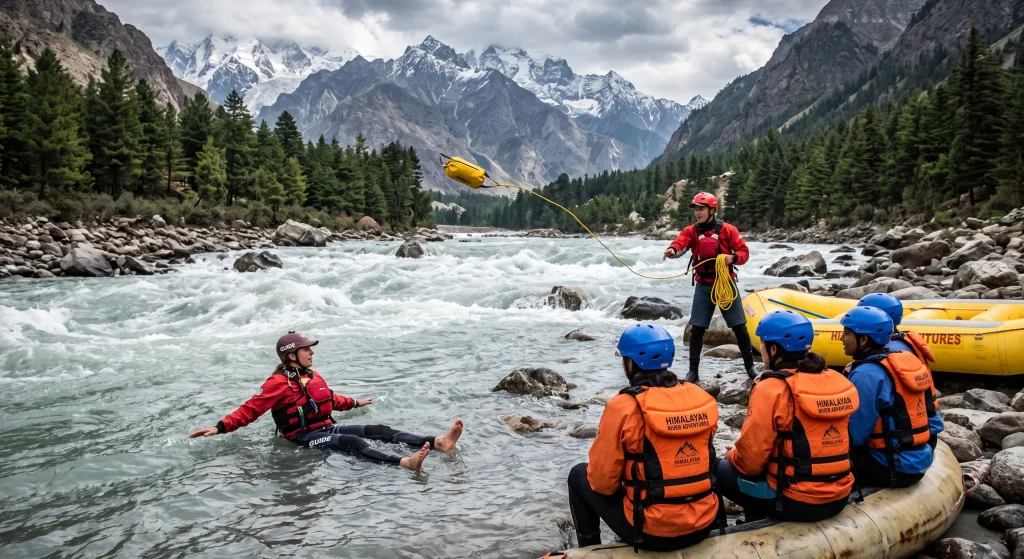
Table of Contents
- Dress for the River, Not the Shore
- Your Safety Gear Matters
- If You Fall Out, Stay Calm
- The Defensive Swimming Position
- Listen for Rescue Instructions
- How River Rescue Works
- Common Mistakes to Avoid
- Preparation Builds Confidence
- Final Thoughts
- Frequently Asked Questions
For many first-time rafters, the biggest fear isn’t the rapid itself.
It’s the thought of falling into the river.
The good news is that falling out of a raft is a situation professional guides train for extensively. Commercial rafting trips are designed with safety systems, certified equipment, and rescue procedures that prepare both guides and participants for exactly this possibility.
Understanding what to do if you fall out of a raft transforms uncertainty into confidence. When you know how to react, you’re far more likely to stay calm and enjoy the adventure.
Dress for the River, Not the Shore
Choosing the right clothing improves both comfort and safety.
If you’re wondering what to wear for whitewater rafting, keep it simple and practical.
Recommended clothing includes:
- Quick-drying synthetic T-shirt
- Lightweight shorts or athletic leggings
- Secure water shoes or sports sandals with heel straps
- Sunglasses with a retention strap (if permitted)
- Sunscreen and waterproof lip balm
Avoid:
- Cotton clothing that stays wet
- Loose footwear or flip-flops
- Heavy jackets
- Jewellery or loose accessories
Most professional operators provide a certified helmet and personal flotation device (PFD), commonly called a life jacket.
Your Safety Gear Matters
Before entering the river, your guide will check that your equipment fits correctly.
Essential rafting gear includes:
- Certified life jacket
- Properly fitted helmet
- Paddle
- Optional wetsuit or splash jacket in colder conditions
Never loosen or remove your life jacket while on the river.
A correctly fitted PFD keeps you buoyant and allows you to conserve energy if you enter the water.
If You Fall Out, Stay Calm
The first few seconds are the most important.
Your instinct may be to panic or immediately try to stand up.
Instead:
- Stay calm.
- Keep breathing.
- Trust your life jacket.
- Listen for your guide’s instructions.
Professional river guides practise rescue techniques regularly and are trained to respond quickly.
Remaining calm makes every rescue easier.
The Defensive Swimming Position
One of the most important whitewater rafting swimming positions is the defensive float.
If you find yourself in moving water:
- Lie on your back.
- Keep your feet pointed downstream.
- Bend your knees slightly.
- Keep your feet near the surface.
- Use your arms to help maintain balance.
This position protects your head and allows you to see approaching obstacles while reducing the chance of your feet becoming trapped on the riverbed.
Avoid trying to stand up in fast-moving water.
Listen for Rescue Instructions
Your guide may give clear verbal commands such as:
- Swim toward the raft.
- Grab the rescue rope.
- Float to the left.
- Hold your position.
Follow instructions immediately.
Professional guides know the safest recovery point based on river conditions, current speed, and nearby obstacles.
How River Rescue Works
Commercial rafting operators carry specialised rescue equipment.
Common rescue methods include:
Throw Bag Rescue
A guide throws a floating rope toward the swimmer.
Once you have the rope:
- Hold it securely.
- Turn onto your back.
- Allow the guide to pull you toward shore or the raft.
Do not wrap the rope around your wrist or body.
Raft Recovery
If conditions allow, the raft approaches the swimmer from a safe angle.
Guides then assist by:
- Grabbing your life jacket shoulder straps.
- Pulling you across the side tube.
- Helping you re-enter the raft.
This process is practised regularly during guide training.
Common Mistakes to Avoid
Even experienced swimmers can make poor decisions in moving water.
Avoid these common mistakes:
- Trying to stand up in strong current.
- Swimming directly against the river flow.
- Ignoring guide instructions.
- Removing your helmet or life jacket.
- Panicking and exhausting yourself.
The river moves faster than most people expect.
Conserving energy is often the safest strategy.
Preparation Builds Confidence
Before launching, every participant should:
- Attend the safety briefing carefully.
- Learn basic paddle commands.
- Check all equipment fits properly.
- Understand emergency signals.
- Ask questions if anything is unclear.
The more prepared you are, the more enjoyable your rafting experience becomes.
Final Thoughts
Falling into the river may sound intimidating, but it’s a situation that professional rafting teams prepare for every single day.
The combination of certified safety equipment, experienced guides, structured rescue procedures, and simple self-rescue techniques makes commercial whitewater rafting far more controlled than many first-time participants imagine.
Knowing what to do if you fall out of a raft isn’t about expecting something to go wrong—it’s about building the confidence to enjoy the adventure with peace of mind.
Before planning your trip, read “Class I to Class V: How to Read Whitewater Rapids Like a Professional River Guide” to better understand river dynamics, explore “The Teamwork Test: Why Whitewater Rafting Is the Ultimate Weekend Group Challenge” to discover how teamwork shapes every rafting experience, and review Adhreline’s Safety Standards and Certified Operator Requirements to see how professionally verified outfitters prepare for every stage of your adventure.
The best adventures aren’t completely free of risk.
They’re built on preparation, knowledge, and experienced professionals who know exactly how to keep you safe.
Frequently Asked Questions
What should I do if I fall out of a rafting boat?
Stay calm, keep your life jacket on, adopt the defensive swimming position with your feet pointed downstream, and follow your guide’s instructions.
What should I wear for whitewater rafting?
Wear quick-drying synthetic clothing, secure water shoes, and avoid cotton, loose footwear, or heavy accessories. Professional operators usually provide helmets and life jackets.
Can I stand up if I fall into the river?
No. In moving water, standing up can increase the risk of foot entrapment. Stay on your back with your feet near the surface until instructed otherwise.
How do rafting guides rescue swimmers?
Guides commonly use throw bags, rescue ropes, or controlled raft recoveries depending on the river conditions and the swimmer’s location.
Is whitewater rafting safe for beginners?
Yes. Commercial rafting trips are designed with trained guides, certified equipment, detailed safety briefings, and river sections appropriate for beginner experience levels.